




Printing Guidelines
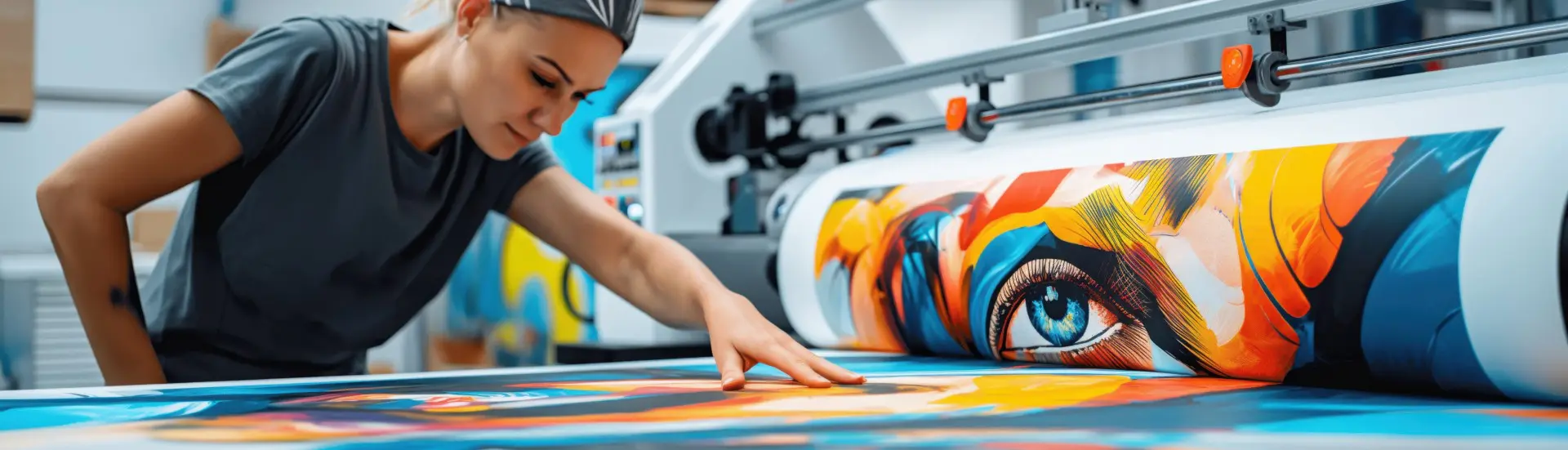
Allow material to adapt to room conditions for 24 hours before printing. It is recommended to handle the media with cotton gloves. Make sure that the media comes not into contact with grease, oil, silicon, and dirt to avoid printing defects. Load the media with care in the printers. Incorrect loading can cause skewing or creasing. Use a take- up device to prevent wrinkling.


It is recommended to calibrate the printer before printing and to make a test print. Print results will vary for different printer/ink combinations. Canon media profiles include recommended settings for ink restrictions and printer parameters. Depending on fluctuations in environment, printer, ink, media and applications, printer parameters may have to be adjusted slightly, in order to obtain the best results.
For high-speed production printing, using an external drying unit is recommended. IJM667 has a black coating on the reverse side. Some inkjet printers check the presence of media in the printer, detecting the reverse side of the media by means of an optical sensor. In some cases this optical sensor is not able to detect the reverse side of IJM667 because it is completely black. The printer will not accept this media when loading. The coating of IJM667 is especially developed for digital inkjet printing. However IJM667 also can be screen-printed. It is recommended to do a test on a small area, because every machine and ink can have different properties.
Fibres of the scrim may fray at edges of the banner. Remove frays or use edge guides for preventing fibres touching the printheads. Frays can be removed by fire, using a gaslighter or torch